DEM512 · Charles Darwin University · 2020
Blue Order
One dollar on every barrel, remitted by the states that lift the oil, into United Nations peacekeeping. Not a tax the Charter already contains. An agreement I am asking producers to make.
“The time has come to switch gears from the Neo to the Ordo.”
Full film · 1 minute 36 seconds
What I am proposing
I am asking producing states to remit one US dollar on every barrel of oil at the moment it is lifted, into a United Nations peacekeeping account. By treaty — or, as a first step, by posting the dollar as a differential. On the 2019 figure I use, 80,622,000 barrels a day, full coverage is more than $80 million a day and about $29.5 billion a year. More than four times the $6.5 billion peacekeeping budget for 1 July 2019 – 30 June 2020. Anything short of full coverage collects less. I do not offer the larger number as a forecast of a partial club.
Assessed contributions stay. This would sit beside them, so peacekeeping is less exposed to arrears. The scale measures capacity to pay, not barrels. I am not asking the Assembly to tear it up. Against the $1,747 billion of world military spending I cite for 2013, $6.5 billion is under half of one percent. Full coverage would lift that share to roughly 2.0–2.3%.
- Levy
- $1
- per barrel, remitted by the producer
- If coverage is full
- $29.5bn
- a year, on 2019 production
- The condition
- Every barrel
- or the dollar stays in the rent
Who carries the dollar
I withdraw the claim that the producer is automatically better off. A state cannot simply write $1.10 back onto a price the market sets. The buyer carries the dollar only when no large producer stands outside, so untaxed crude cannot undercut taxed crude. Until that fence is closed, the dollar is a share of the rent.
The barrel that can leave the fence open is the American barrel. The United States is the largest funder of peacekeeping and a leading producer. Without it, the pass-through does not hold. I state that as the condition, not as a detail for later.
One dollar is a revenue measure. It is not meant to cut the use of oil. A higher charge would try to steer consumption, and it would meet more resistance. On a day the untreated barrel would have cleared at $38.65, full coverage means the buyer pays about $39.65 and the state remits one dollar. It does not mean the state sells at $38.75 and finishes ten cents ahead.
The same barrel, two ways
- Buyer pays
- About $1 more
- May pay nothing more
- State remits
- $1.00
- $1.00
- Against the old market
- Near the old net
- About $1 from the rent
Run the same sum
The 2019 figure and a one-dollar levy, if the barrels are inside the agreement. Move either. A non-leap year is 365 days. $29.5 billion is the round number on 80.6 million barrels. A partial club collects less than the line below.
$80.6 million a day · $29.4 billion a year
4.5 times the paper’s $6.5 billion peacekeeping budget. This is the 2019 case, if coverage is full.
Who pays for peace, who sells the oil
I set the 2019 contributors next to the exporters because the lists do not match. The United States led peacekeeping finance and ranked sixth in export value. Saudi Arabia led exports and was not in the contributor top ten. The scale is built on capacity to pay, and on the extra share of the permanent members. I am not calling that a mistake to be taxed away. I am saying the states that take the rent should be in the room, funding this account beside the scale.
Assessed peacekeeping contributions, 2019
| Member state | Share |
|---|---|
| United States | 27.89% |
| China | 15.21% |
| Japan | 8.56% |
| Germany | 6.09% |
| United Kingdom | 5.79% |
| France | 5.61% |
| Italy | 3.30% |
| Russian Federation | 3.04% |
| Canada | 2.73% |
| Republic of Korea | 2.26% |
Crude export value, 2019
| Exporter | Value | Share |
|---|---|---|
| Saudi Arabia | $133.6bn | 13.3% |
| Russia | $121.4bn | 12.1% |
| Iraq | $83.3bn | 8.3% |
| Canada | $68.1bn | 6.8% |
| United Arab Emirates | $66.1bn | 6.6% |
| United States | $65.3bn | 6.5% |
| Kuwait | $42bn | 4.2% |
| Nigeria | $41bn | 4.1% |
| Kazakhstan | $33.6bn | 3.3% |
| Angola | $32.3bn | 3.2% |
Sources in the paper: UN peacekeeping, “How we are funded”; Workman, crude oil exports by country. Shares of export value, not of barrels.
How it would have to move
- 01
Producers agree
By treaty, or first by posting the dollar as a differential among the states that lift the oil. The American barrel is the condition. If it stays outside, untaxed crude undercuts the rest, and the pass-through fails.
- 02
A rebate
A flat dollar falls harder where fuel is a large share of a small income. Low-income importers should be rebated from the same account. The 2009 scale already says less-developed countries have a limited capacity to pay for peacekeeping. I will not build an instrument that contradicts that.
- 03
Fifth Committee
Once the money arrives, it keeps the accounts. It does not create the charge. Article 17 lets the Assembly apportion expenses among members. It does not reach a wellhead inside a state’s own territory.
- 04
General Assembly
It would direct the money to peacekeeping, against mandates already given. A larger budget does not write a larger mandate. What remains, if anything remains, only by a further decision of the Assembly. Not a blank cheque, and not a matter for Article 99.
- 05
A small team
Peacekeeping officers would take the text to the producing states, and to the importers who would carry the dollar if the fence holds. The diplomacy is with those governments. Where the argument needs a room in New York, I mean the Council on Foreign Relations, not the Trilateral Commission. That name was a mistake. The Council on Foreign Relations is a place to be heard. It is not a party to the dollar, and it is not the Security Council.
- 06
Then gas, as a bridge
If the oil instrument holds, the same meter can later cover gas, counted as a barrel of oil equivalent. I do not call this permanent resilience. The base shrinks if the world leaves these fuels. Blue Order is a bridge: stable while the barrels are still lifted, and honest about the end of that.
A hearing, not a seat
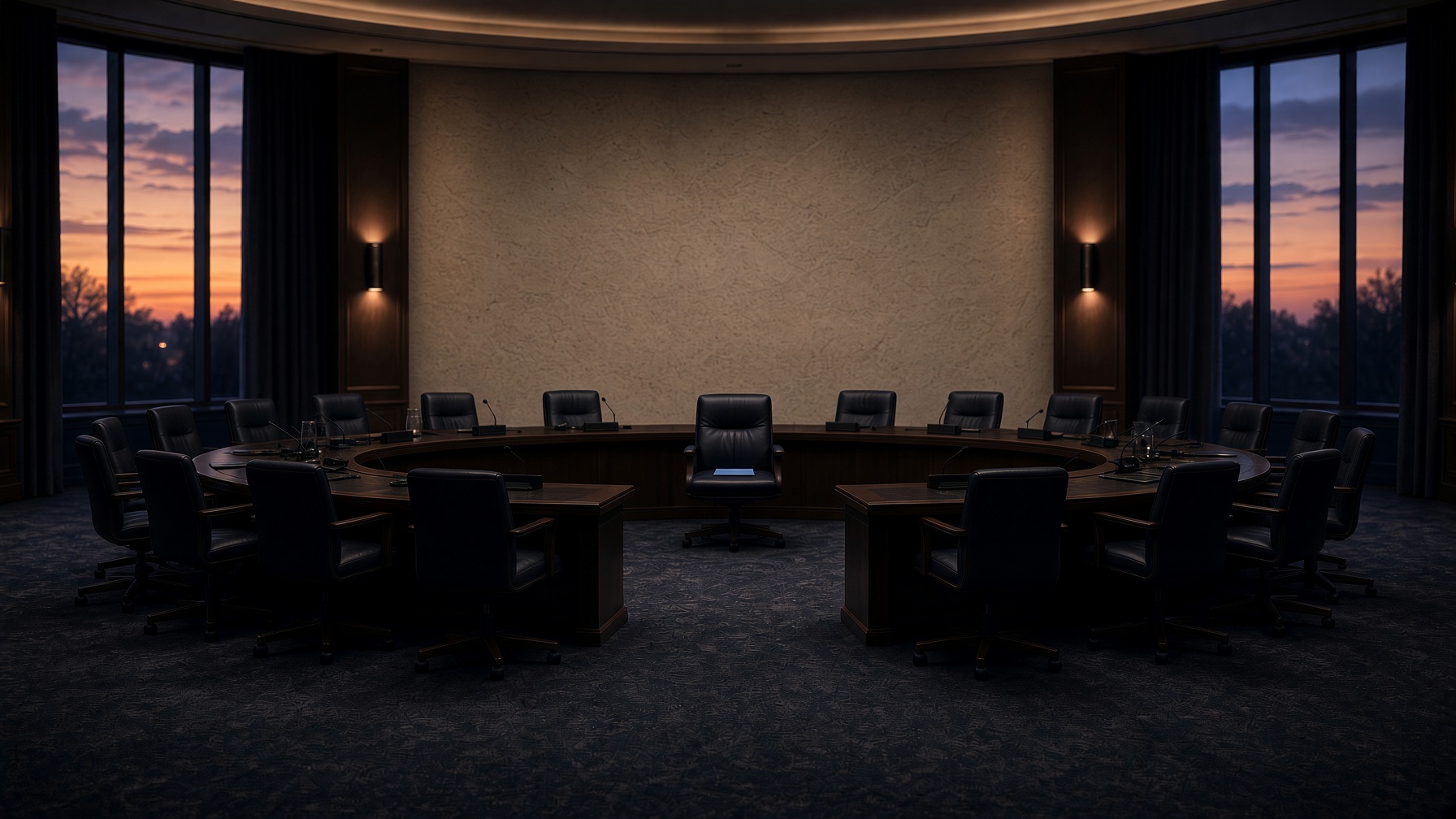
If the producers pay the dollar, someone will ask whether OPEC should sit on the Security Council. I will not ask for that.
The Council seats states, not organisations. OPEC is not a member of the United Nations. A chair for it would mean amending the Charter, and every permanent member would have to ratify the loss of its own exclusivity. That will not happen. It should not be the price of the dollar. Japan and Germany have carried this organisation for decades without buying a permanent seat. A levy must not become a bribe for status.
What I can imagine is smaller, and it needs no new chair. When the Council discusses the peacekeeping account the dollar funds, the producers who remit it should be heard. The Charter already lets the Council invite a state whose interests are specially affected. A standing practice of that kind — the state then chairing the producers’ agreement, a voice, no vote, no veto — is the place I would ask for. Not a seat. A hearing. And only after the dollar is being paid, not as the condition for paying it.
Name it OPEC and it is harder, not easier. Russia already sits as a permanent member and works with the producers. The United States is the condition on the levy itself. The hearing would, in practice, be for the producing states that are not already at the table. That is a state’s voice. It is not a cartel’s chair.
Peacekeeping first
The money is for peacekeeping, against the mandates the Council and the Assembly have already given. What is left is not mine to assign in advance. The Assembly can direct it. I will not dress a list — development, climate, a health emergency — as if the levy itself had chosen it.
I still set Blue Order apart from the other instruments that have been discussed. A tax on the arms trade would fund peace from weapons. A steep carbon tax shrinks the base it taxes. One dollar does not pretend to steer the market. It raises a sum, for as long as the barrels are lifted, and it says so.